What the homeowner notices
Normal ice-maker behavior versus what a fault looks like
A functioning Sub-Zero ice maker runs quietly in the background: it fills, freezes and harvests on a cycle timed to mold temperature. You should see full, clear-to-slightly-opaque cubes dropping into the bin roughly every 90 to 150 minutes, depending on the series. The bin should stay reasonably full with normal household use, and the unit should not make grinding, clicking or extended-run motor sounds during harvest.
The homeowner's first clue of trouble is usually hollow or crescent-shaped cubes — cubes that look full-size from the outside but are thin-walled shells. A second pattern is no ice at all: the bin empties and never refills. A third is a very slow fill — cubes form but take three or four times longer than usual, and the bin never catches up with demand. Sometimes you notice a fresh-food section warm while the freezer still holds temperature; that is a separate cold-side fault, but it does mean the unit is under additional thermal stress that can affect freeze cycle timing.
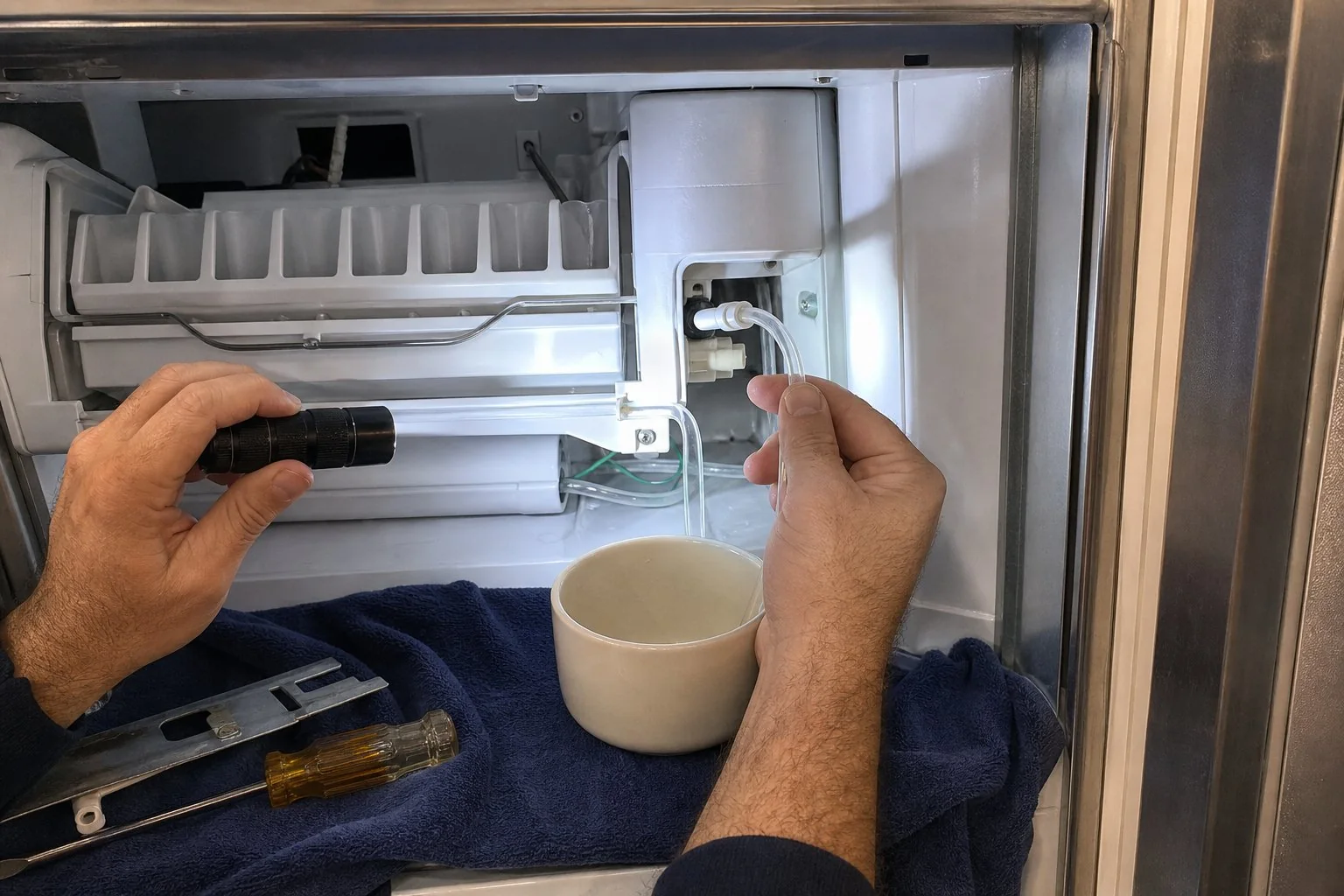
When to stop using the ice maker: if you hear a sustained buzzing from the inlet valve area (a valve stuck open or failing to close fully), turn the ice maker off and call. A stuck-open valve can overflow the mold and send water to the freezer floor. Similarly, if you see standing water under the unit, stop the ice maker and check whether the drain is clear before running another cycle.
Normal vs. abnormal at a glance
Normal: clear cubes, 90–150 min cycle, quiet harvest motor, bin stays reasonably full. Abnormal: hollow shells, no output after several hours with the freezer at setpoint, slow drip fill, grinding harvest motor, or buzzing inlet valve. The line between a simple fix and a module replacement runs through that fill-volume measurement — it can't be skipped.