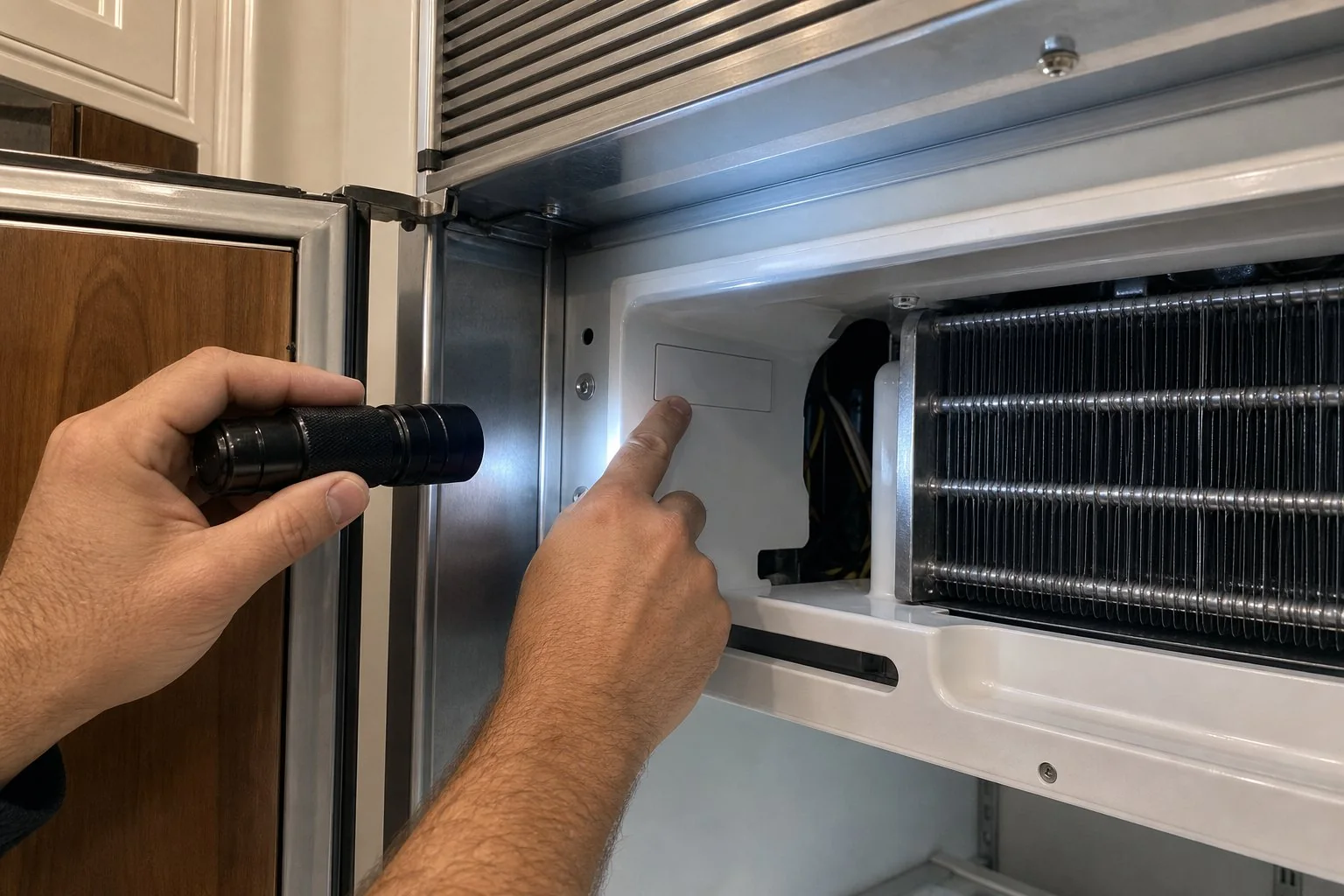
Sub-Zero has produced distinct product families over several decades, and the model number is the only reliable way to determine which generation and spec is in front of us. The gap between a correct and incorrect part is not cosmetic — it shows up as a repair that fails early, a gasket that leaks, or a control board that throws the same alarm it was installed to fix.
- Sealed-system specification
- The model encodes the compressor type, refrigerant charge (R-134a vs R-600a), and evaporator geometry. Sending a technician without this means potentially bringing the wrong refrigerant handling equipment. This is not a preference — it is an EPA-regulated requirement for refrigerant handling.
- Gasket profile
- Sub-Zero gaskets are not universal. A 532 and a 700-series column use different magnetic gasket profiles and corner-mold geometries. Installing the wrong profile results in a gap that the unit cannot overcome, regardless of how carefully the door is adjusted. The model number selects the exact part, not a close substitute.
- Control board — stocked vs ordered
- Some control board variants for high-production models are kept on the regular parts route. Others, particularly boards for older or less common configurations, require a special order with a lead time of several business days. The model and serial together confirm which scenario applies before the visit — so you are not waiting at home for a board that wasn't on the truck.
- Ice module compatibility
- Ice maker modules, harvest thermostats, and inlet valves vary across the BI, UC, and column families. A replacement module sourced for the wrong sub-model may physically install but will not complete the harvest cycle correctly, leaving the symptom (slow ice, hollow cubes) unchanged.
- Thermistor variant
- Temperature sensors on Sub-Zero units changed resistance curves across production runs. Installing a thermistor from the wrong run causes the control board to read temperatures inaccurately, which can produce phantom display alarms, compressor short-cycling, or a zone that cannot hold setpoint — all of which look like more expensive problems than they are.